Industrial mixers
Animal feed mixer
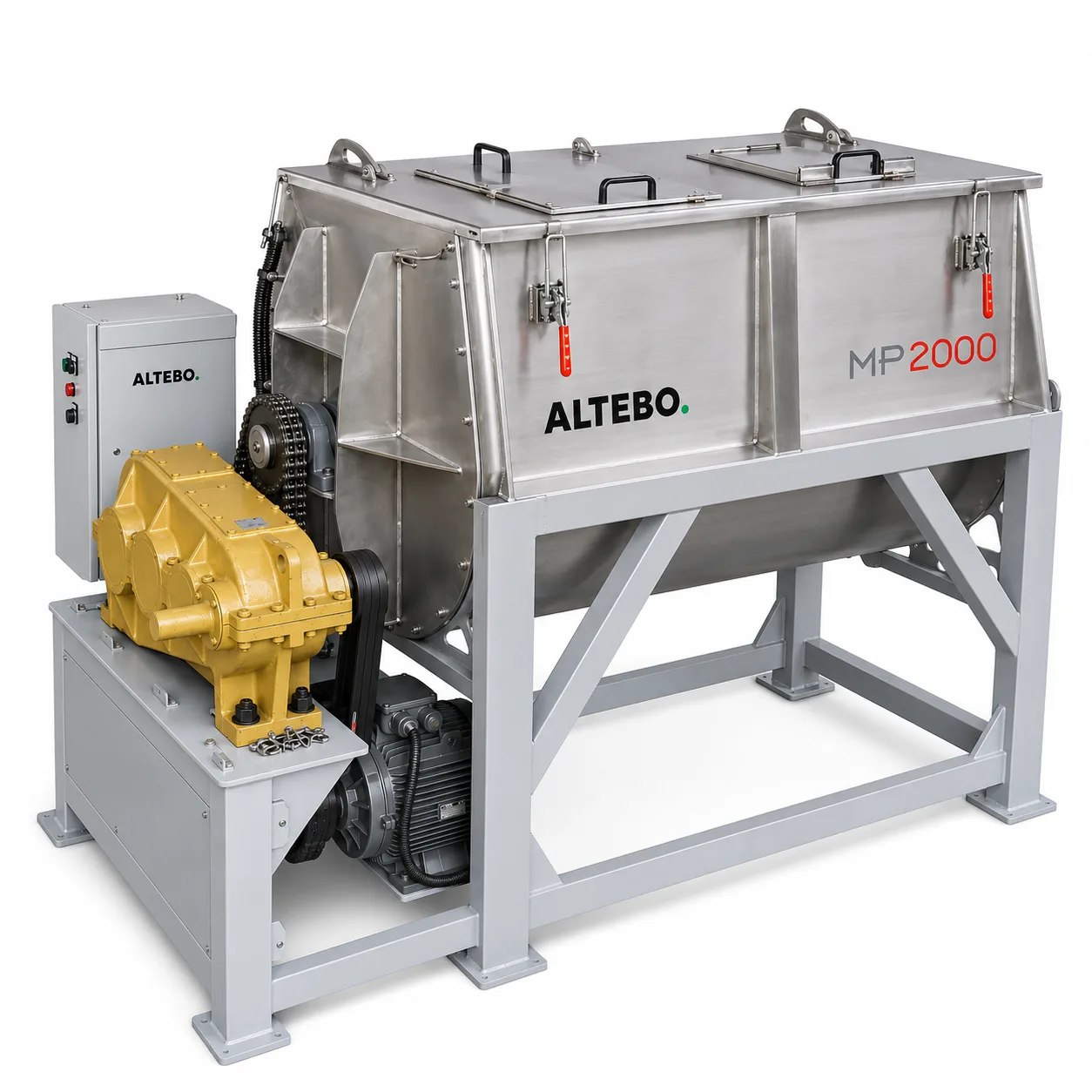
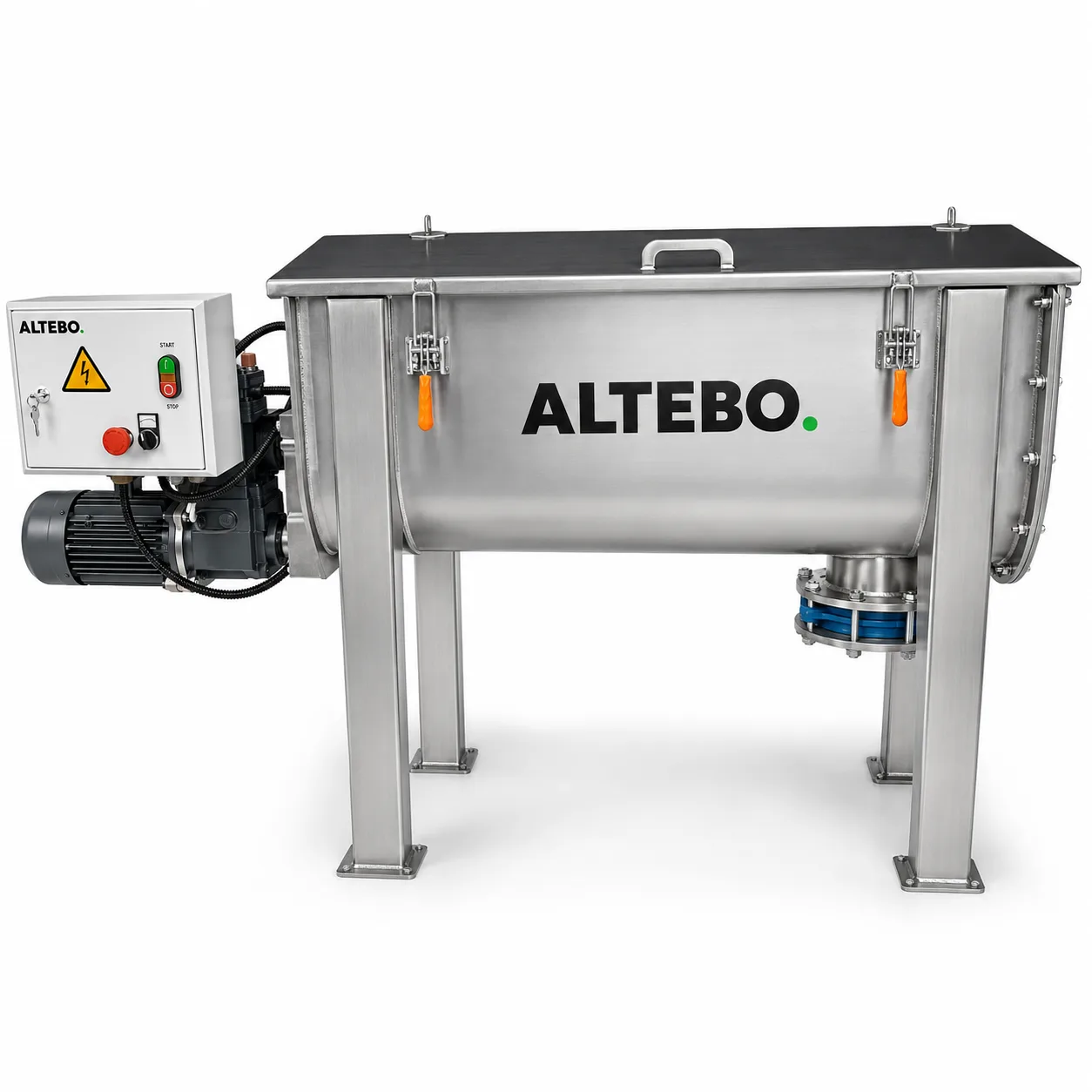
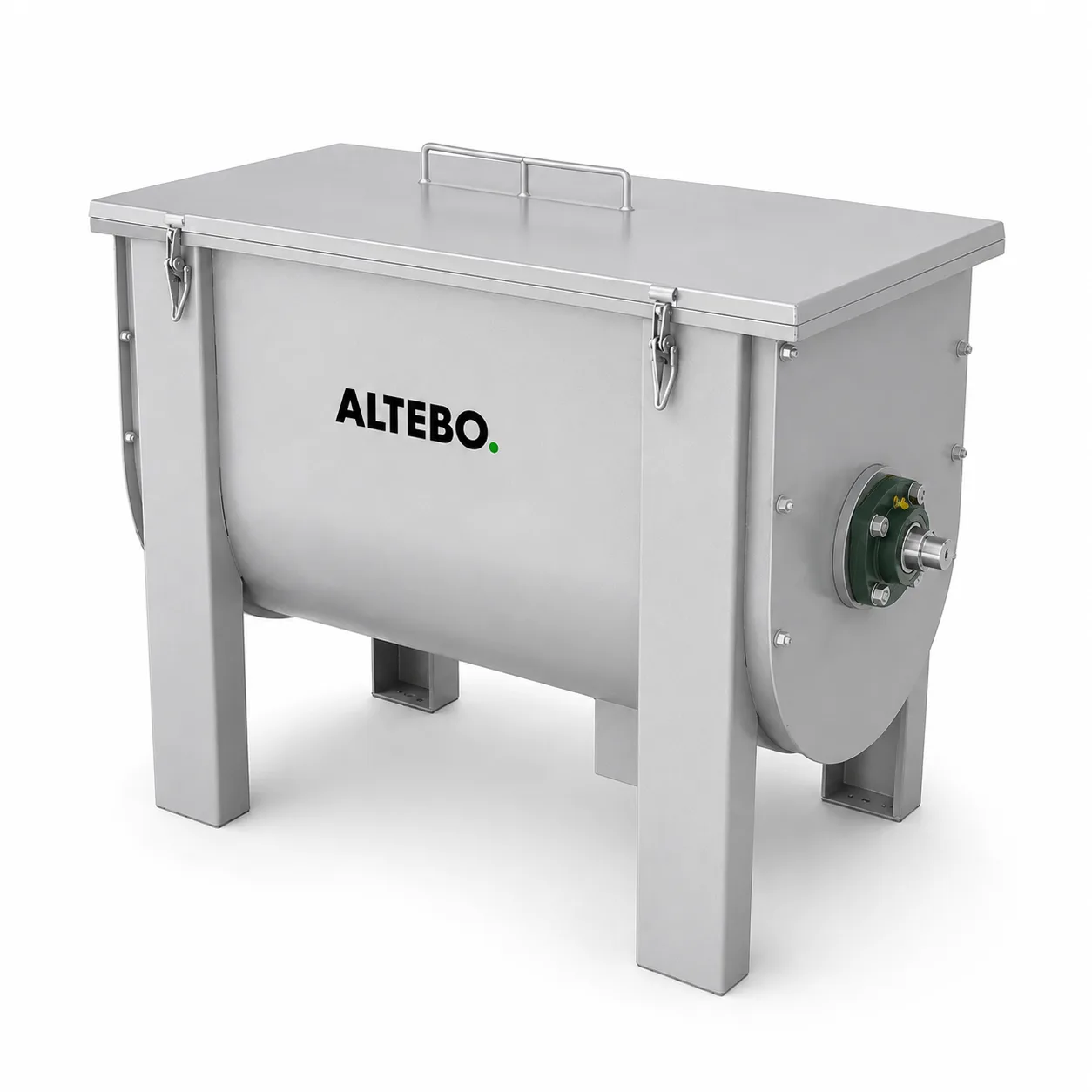
Horizontal double-spiral mixer for feed rations — ground cereals, meals, bran, vitamin-mineral premixes, molasses and vegetable fats. Built routinely from 500 to 10,000 L per batch.
Also known as: compound feed mixer · ration mixer · double-spiral feed blender
Specifications
| Capacity | 500 – 10,000 L / batch |
|---|---|
| Material | Stainless or steel with a food-grade coating |
| Motor power | 5.5 – 55 kW |
| Drive | Gearmotor or tractor power take-off |
| Discharge | Wide-opening valve at the base of the trough |
| Options | Load cells · nozzles for molasses and fats · protective grille |
The figures above are the ranges we build routinely, not construction limits. We design and manufacture any capacity, power rating and envelope to order — including below or above the ranges in the table.
Industrii
- Agriculture
- Food
- Individually sized — on your material, throughput and space
- Technical proposal and price, normally within 48 hours
- Installation, commissioning and service from our own plants
When to choose it
The concrete situations where this machine is the right answer — and the one where we recommend something else from our range.
You prepare rations from components of very different densities — ground cereals, meals, bran — which in a weak mixer separate instead of blending.
The recipe contains a vitamin-mineral premix in small quantity, and uneven distribution means under- or over-dosed animals.
You add molasses or vegetable fats over the dry phase: nozzles for liquid additions are fitted.
You work on a farm without a reliable three-phase supply — the mixer can be supplied with a tractor power take-off drive.
When this is NOT the right machine
For pharmaceutical premixes, or recipes where every component has to be weighed and recorded separately, you need gravimetric dosing, not just mixing.
Vezi Gravimetric screw feederHow it works
The feed mixer blends rations in compound feed plants and on farms with their own feed kitchen: ground cereals, meals, bran, vitamin-mineral premixes and semi-moist additions such as molasses or vegetable fats.
The central shaft carries double helical spirals — inner and outer — that move the material in counter-flow: the outer spiral towards one end of the trough, the inner one towards the other. The double circulation homogenises components of very different density and particle size and evenly distributes premixes dosed in small quantities, which is the essential condition for ration quality.
The trough is built in stainless or in steel with a food-grade coating, with a wide-opening discharge valve at the bottom for rapid emptying of the batch. The cover with a protective grille allows safe manual charging, and on request the mixer is supplied with load-cell weighing and nozzles for liquid additions.
Double spiral in counter-flow
Homogenises components of differing density and particle size.
Premixes correctly distributed
Small dosages dispersed evenly through the whole ration.
Fast discharge
Wide-opening valve at the base of the trough — emptying in minimum time.
Integrated weighing (optional)
Load cells for dosing the components directly into the mixer.
Variante constructive
What actually differs between them — not just what they are called.
With electric drive
Mains-fed gearmotor — the version for feed plants and farms with a three-phase supply.
With tractor power take-off
For farms without an adequate electrical supply at the working point.
On load cells
Components are weighed directly into the mixer, with a report per ration — necessary when you have to document the feed recipe.
With nozzles for liquid additions
A manifold for molasses or vegetable fats, sprayed over the dry phase during mixing.
Frequently asked questions
Question not answered here? Write to us — an engineer replies, nu un robot.
How long does it take to mix a ration?
See the “Mixing time” row in the specification table. The time depends on the number of components and the density difference between them — for rations with a small premix dosage, the time is longer than for a simple recipe.
Does the premix really reach the whole ration evenly?
That is the role of the double spiral in counter-flow: the outer one moves material one way, the inner one the other, so the whole mass circulates rather than just the top layer.
Can I add molasses or fats?
Yes, with spray nozzles fitted in the cover. Semi-moist additions are introduced over the dry phase during mixing, so that they do not form lumps.
Will it run without three-phase power, on the farm?
Yes — it can be supplied with a tractor power take-off drive, for working points without an adequate electrical supply.
Can the recipe be weighed directly in the mixer?
Yes, mounted on load cells, with a weighing report for every ration. Useful when you have to document the feed recipe.
How is it cleaned between different recipes?
The wide-opening discharge valve empties the trough quickly and completely.