Industrial mixers
Ploughshare mixer
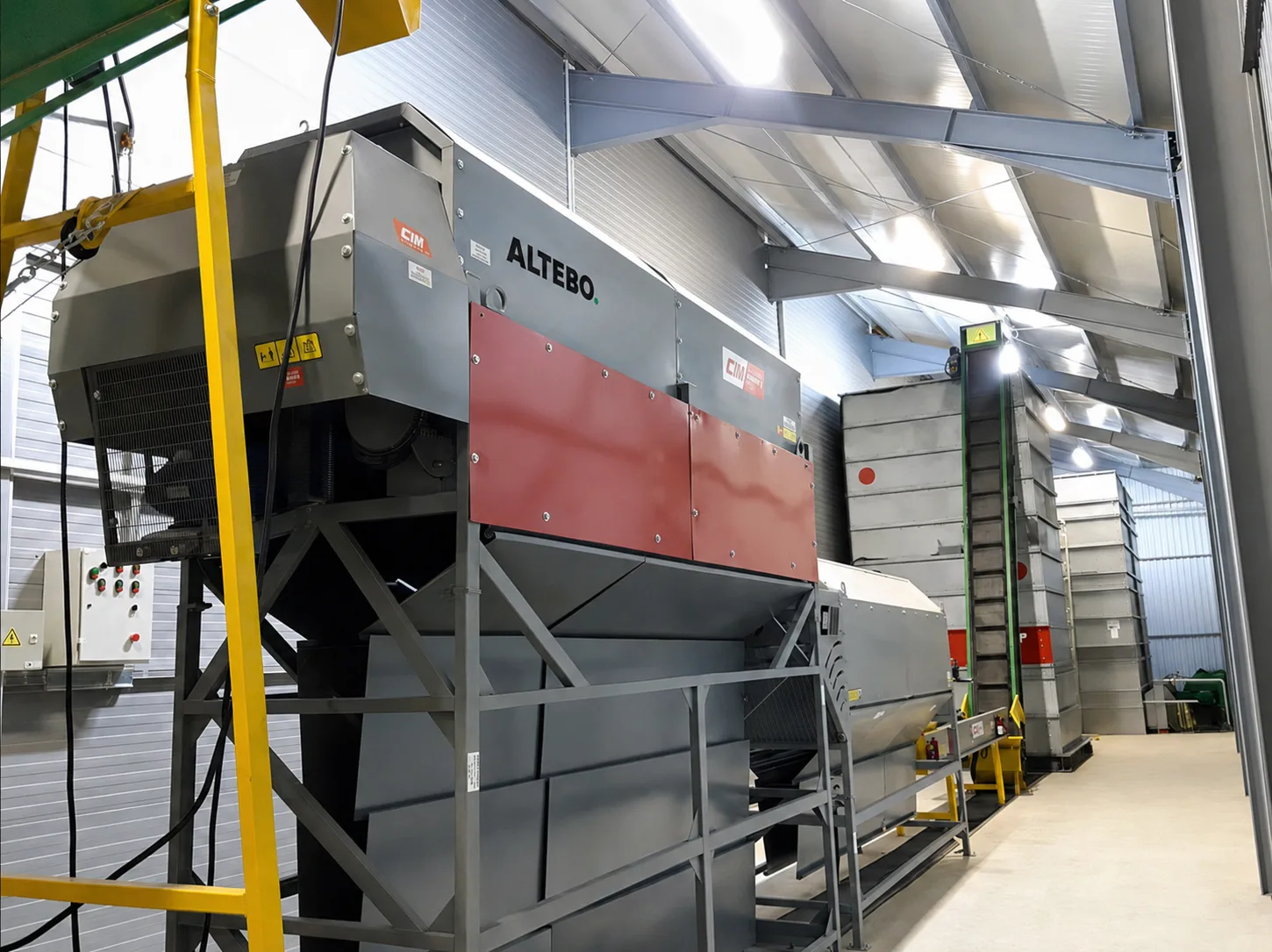
Ploughshare mixer for recipes in which an additive at under 1 % has to be distributed evenly through the whole batch — enzymes, vitamins, pigments, technical additives. Also supplied to Knauf, for construction materials.
Also known as: plough mixer · ploughshare blender · fluidised bed batch mixer
Specifications
| Capacity | 100 – 15,000 L / batch |
|---|---|
| Product contact material | AISI 304 / 316L stainless or carbon steel |
| Motor power | 4 – 110 kW |
| Drive | High-speed gearmotor |
| Chopper blades | Independently driven, side-mounted (optional) |
| Minimum additive concentration | Below 1 % of the batch |
| Options | Chopper blades · liquid spray nozzles · thermal jacket · vacuum |
The figures above are the ranges we build routinely, not construction limits. We design and manufacture any capacity, power rating and envelope to order — including below or above the ranges in the table.
Industrii
- Chemicals
- Food
- Construction
- Pharma
- Individually sized — on your material, throughput and space
- Technical proposal and price, normally within 48 hours
- Installation, commissioning and service from our own plants
When to choose it
The concrete situations where this machine is the right answer — and the one where we recommend something else from our range.
The recipe contains an expensive or active additive at a very low concentration — enzyme, vitamin, pigment — and uneven distribution means a rejected lot.
You mix powders that agglomerate: independently driven chopper blades break up the lumps during mixing.
The product consists of granules that must not be broken — fluidisation throws the material into the free space of the drum rather than pressing it against the wall.
You produce construction materials and need homogenising at industrial line throughput — the same principle we supplied to Knauf.
When this is NOT the right machine
For pharmaceutical powders requiring zero shear and validatable cleaning, ploughs rotating at high peripheral speed are too aggressive.
Vezi V-blenderHow it works
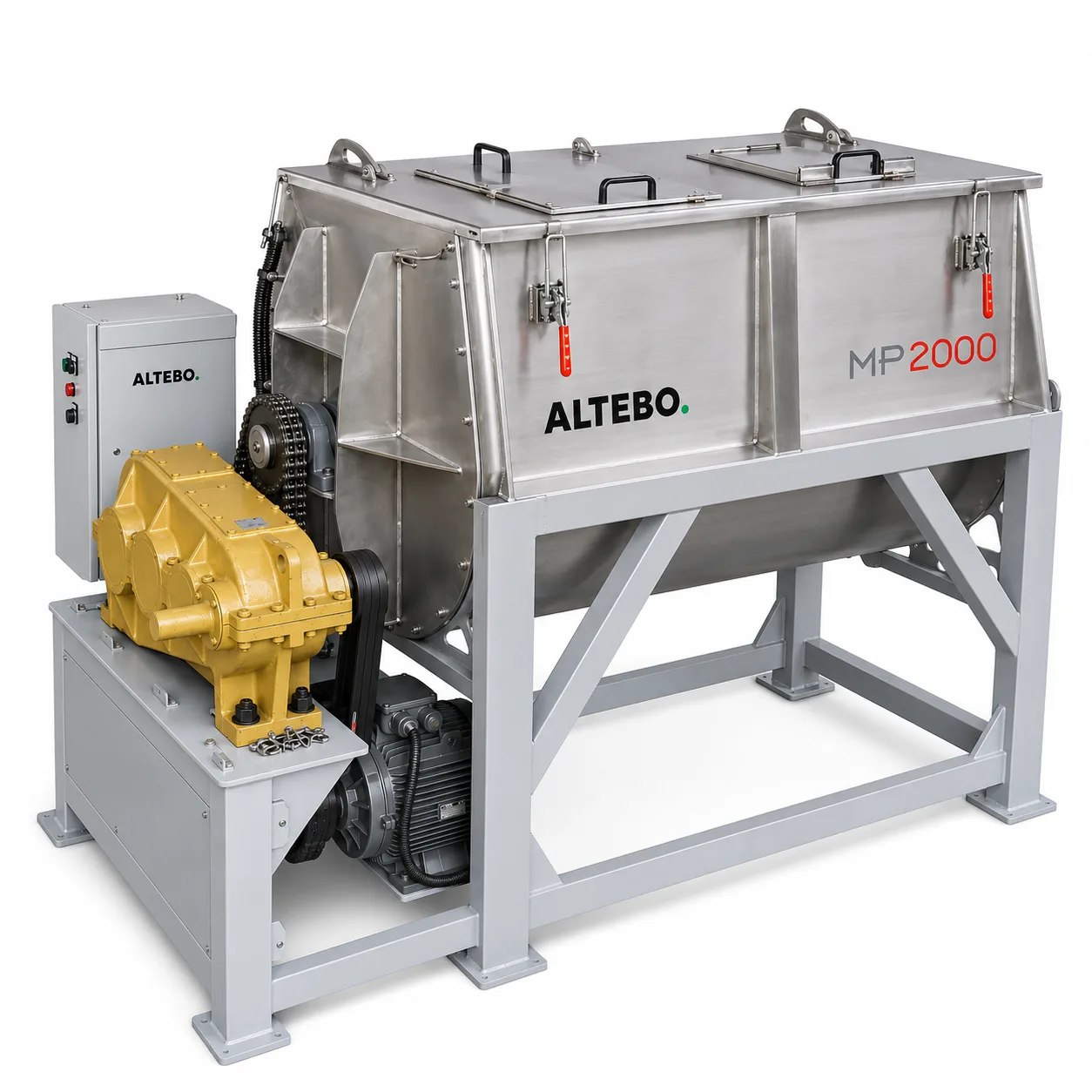
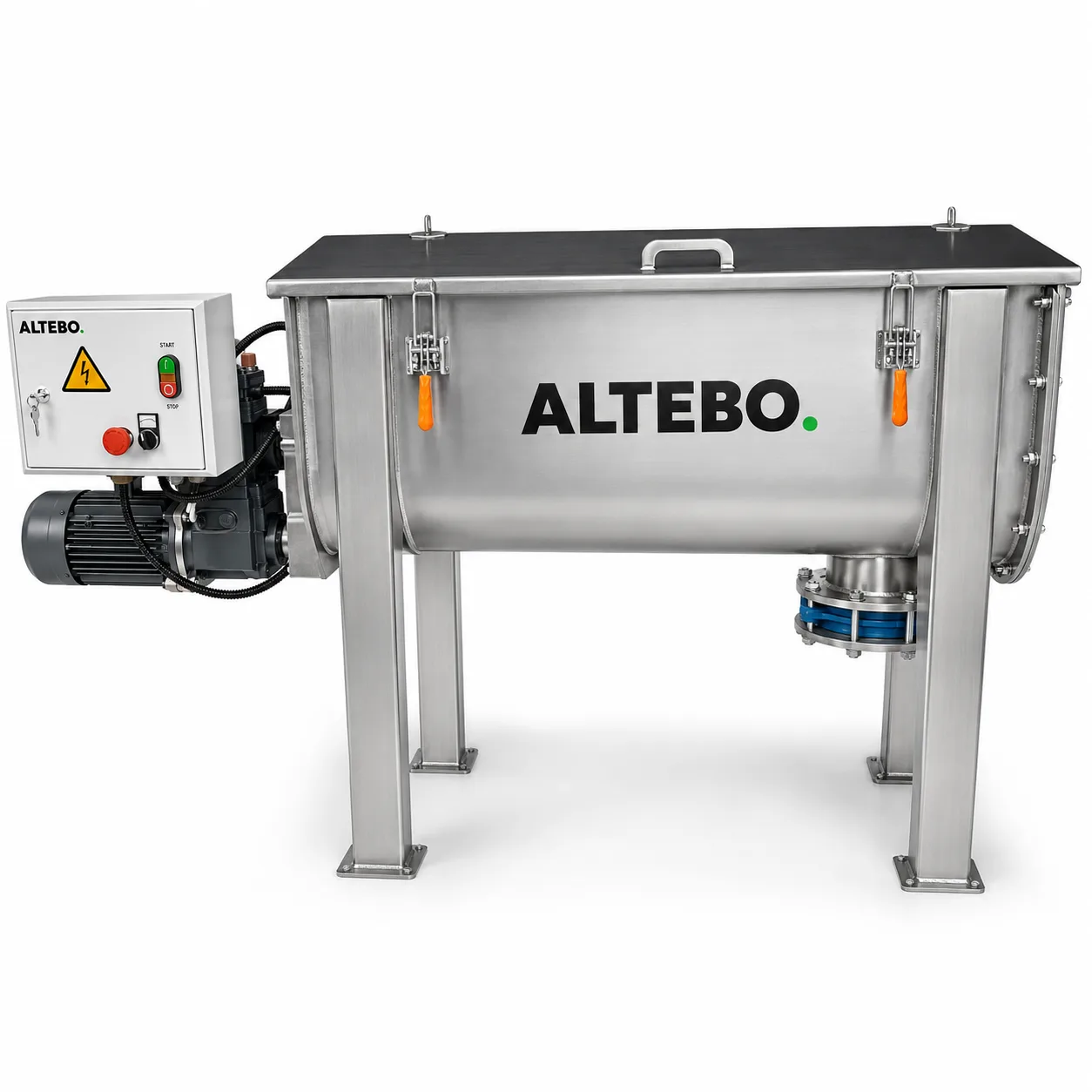
The ploughshare mixer mixes by mechanical fluidisation and is chosen where the recipe contains components at very low concentrations — additives, enzymes, vitamins, pigments — that have to be distributed evenly through the entire batch, in a short time.
The plough-shaped tools, mounted on the central shaft and rotated at high peripheral speed, cut through the material layer and throw it into the free space of the cylindrical drum. The product passes into a fluidised state in which particles intermingle freely, and the mix reaches homogeneity within minutes, with gentle mechanical action on the granules.
For recipes with agglomerates or liquid addition, independently driven chopper blades are fitted in the drum to disperse lumps and sprayed liquid. The AISI 304/316L stainless or carbon steel build includes inspection covers, product-specific seals and discharge through a pneumatic valve.
Plough-shaped tools
Mechanical fluidisation of the product — mixing throughout the whole batch.
Distribution at low concentrations
Additives disperse evenly, even at dosages below 1 %.
Chopper blades (optional)
Break up agglomerates and disperse liquid sprayed into powder.
Gentle action
Granule structure is preserved despite the mixing speed.
Variante constructive
What actually differs between them — not just what they are called.
Standard, without choppers
Just the ploughs on the central shaft. Sufficient for free-flowing powders that do not form agglomerates.
With chopper blades
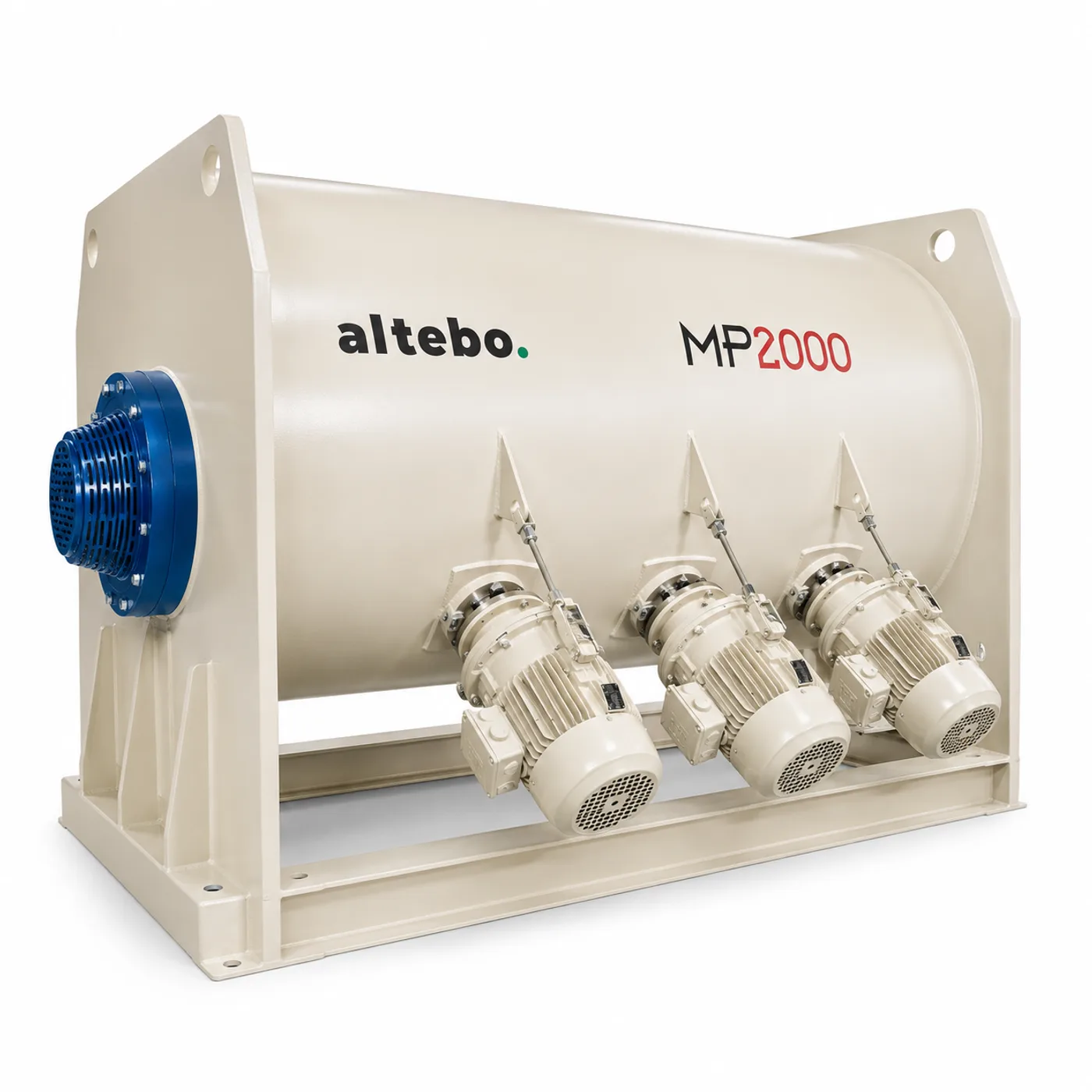
One or more chopper groups with their own motors, side-mounted. They break up agglomerates and disperse sprayed liquid — visible in the photograph of our machine, with three groups mounted on the body.
With a thermal jacket
For processes where the product is heated or cooled during mixing.
Under vacuum
For vacuum drying the product during mixing, at lower temperatures than at atmospheric pressure.
Frequently asked questions
Question not answered here? Write to us — an engineer replies, nu un robot.
How small can the additive dosage be?
Below 1 % of the batch mass — that is the typical situation for which this mixer is chosen. The smallest dosage tested is given in the specification table, in the “Minimum additive concentration” row.
What are the chopper blades for and when are they needed?
They are groups of blades with their own motor, side-mounted on the drum, rotating much faster than the main shaft. You specify them in two situations: when the powder forms lumps, and when you add liquid over the dry phase — without them, the liquid creates agglomerates that will not break down again.
How is it different from a paddle mixer?
In peripheral speed. The ploughs rotate fast enough to throw the material into the free space of the drum — the product is fluidised, not merely tumbled. That is why they distribute very low-concentration additives more reliably, but they also draw more power at the same capacity.
Does it break up granules at that speed?
The action is gentle precisely because the material is thrown into free space rather than pressed between the tool and the wall. If your product is unusually fragile, tell us — we size the peripheral speed for it.
Have you supplied mixers like this to major producers?
Yes — a ploughshare mixer for blending construction materials was supplied to Knauf.
Can it be cleaned completely between recipes?
The cylindrical drum has inspection covers and the ploughs leave accessible surfaces.