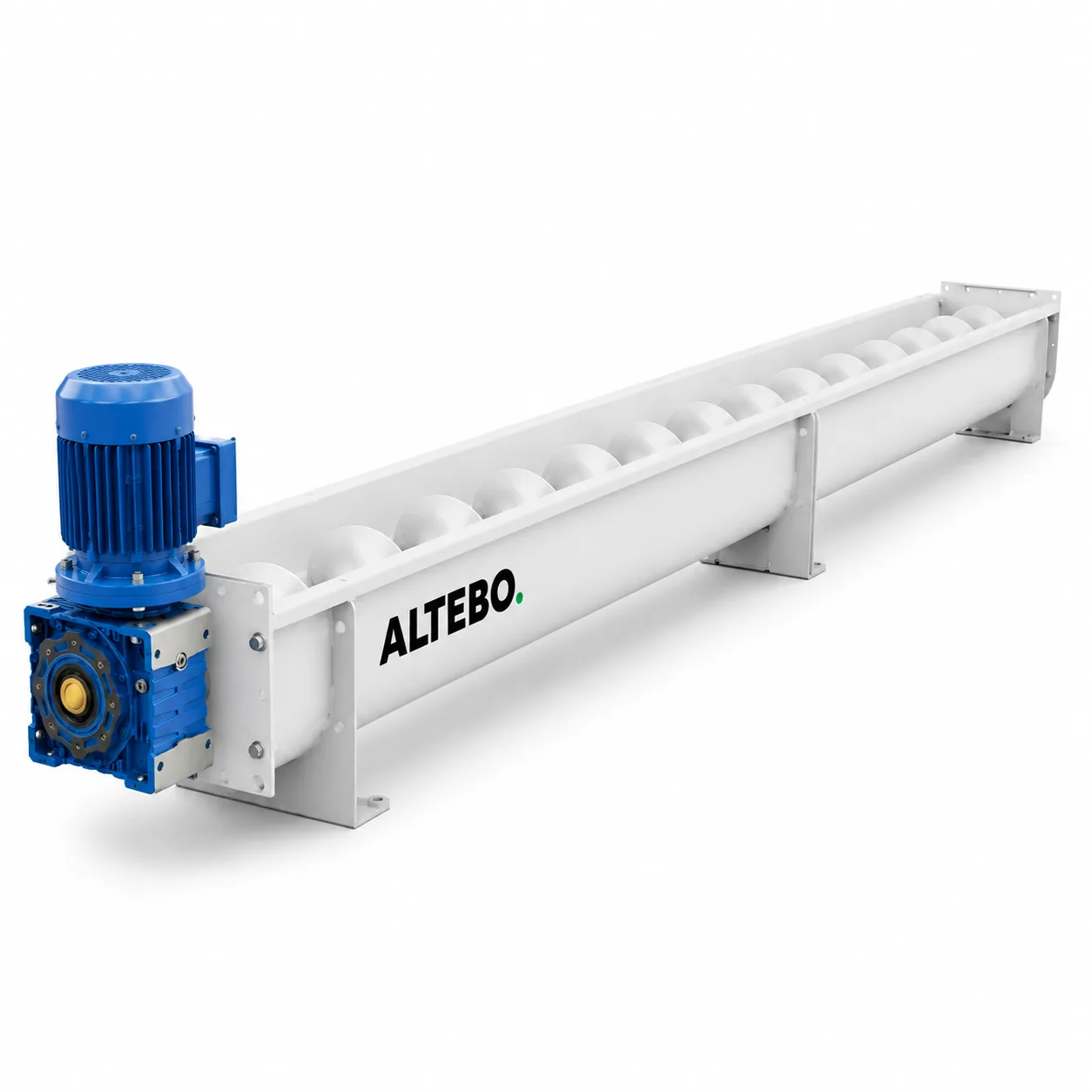
Screw conveyors
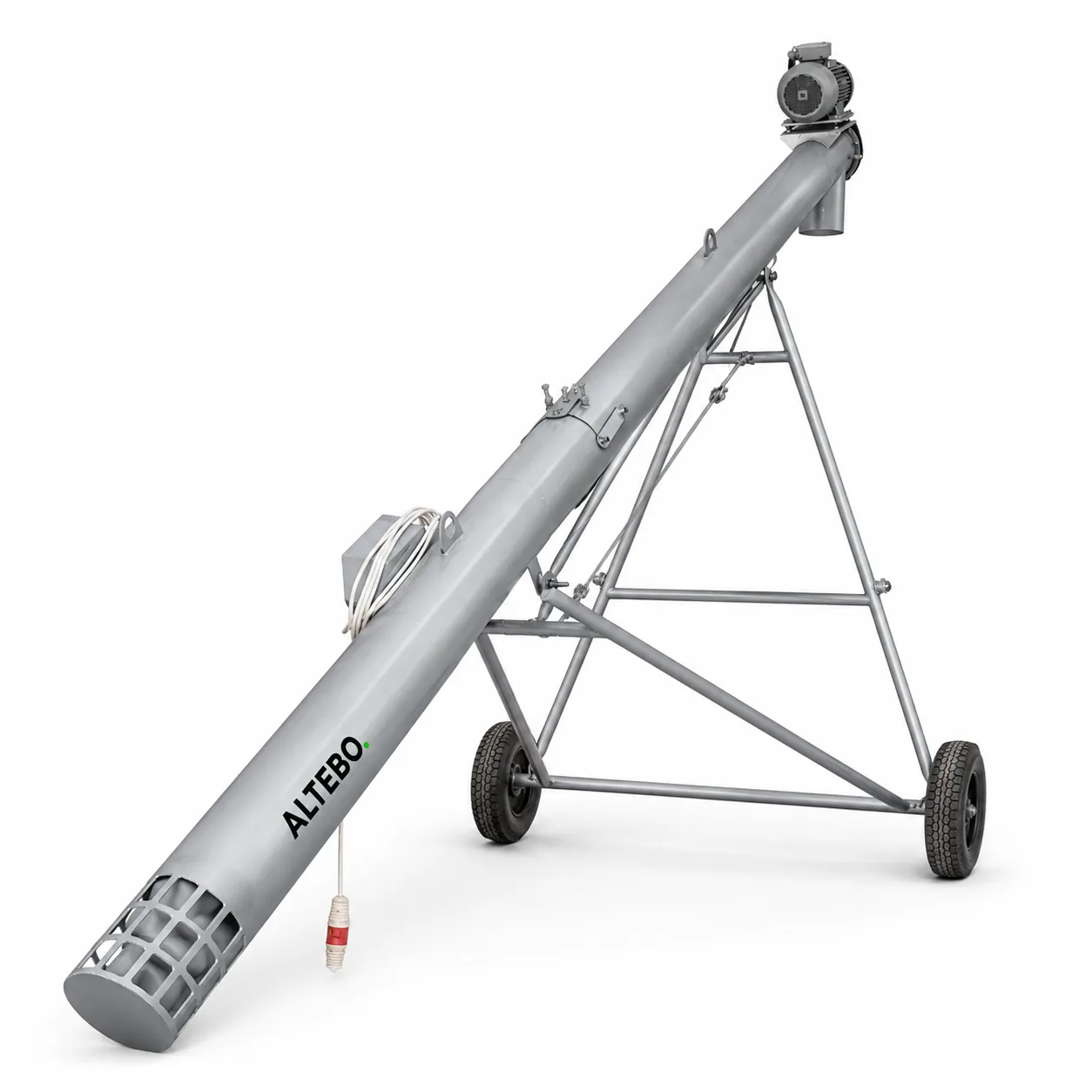
Mobile screw conveyor
Wheel-mounted mobile screw conveyor for loading and unloading grain on farms and at intake stations. Profiled flight edges that convey the kernel without breaking it. Built routinely at 20 – 100 t/h.
Also known as: mobile grain auger · portable screw conveyor · loading auger
Specifications
| Throughput | 20 – 100 t/h (grain) |
|---|---|
| Length | 6 – 12 m |
| Working angle | Adjustable |
| Material | Electrostatically painted steel or food-grade stainless |
| Motor power | 3 – 15 kW |
| Drive | Electric motor with gearmotor |
| Options | Stainless build · openings adapted to existing machines |
The figures above are the ranges we build routinely, not construction limits. We design and manufacture any capacity, power rating and envelope to order — including below or above the ranges in the table.
Industrii
- Agriculture
- Food
- Individually sized — on your material, throughput and space
- Technical proposal and price, normally within 48 hours
- Installation, commissioning and service from our own plants
When to choose it
The concrete situations where this machine is the right answer — and the one where we recommend something else from our range.
Working points change through the campaign: you load lorries, fill hoppers and stores, feed the conditioning plant — with the same machine.
You handle grain and the percentage of whole kernels affects the price of your lot directly — the profiled flight edge is the constructional difference that matters here.
You need to discharge at different heights: the working angle is set to the height of the discharge point.
You want a machine a single operator can move, without a crane or a loader.
When this is NOT the right machine
If the route is fixed in the hall and the machine stays permanently in one place, the mobile frame and the angle adjustment are costs with no benefit.
Vezi Fixed screw conveyorHow it works
The mobile screw conveyor serves working points that change through the campaign: loading and unloading vehicles, filling hoppers and stores, feeding grain conditioning plant — on farms, at intake stations and in processing units.
The flight with profiled edges conveys the kernel without breaking it, keeping the percentage of whole grain up — a parameter directly linked to the commercial value of the lot. The working angle is set to the height of the discharge point, and the wheeled frame allows a single operator to reposition the machine.
The build, in electrostatically painted steel or in stainless for food applications, is sized for the peaks of the campaign, with the electric motor and gearmotor protected against overload. The feed and discharge openings are adapted to the machines already on the farm, and maintenance comes down to simple operations that can be done on the spot.
Profiled flight edges
Conveying without breaking the kernel — maximum percentage of whole grain.
Adjustable working angle
Adapts to the height of the hopper, store or vehicle.
Mobile, on a wheeled frame
Repositioned by a single operator, between working points.
Sized for the campaign
Construction and drive chosen for seasonal peaks.
Variante constructive
What actually differs between them — not just what they are called.
Electrostatically painted steel
The usual version for farms and intake stations.
Food-grade stainless build
When the grain goes straight into food processing and stainless is required on the contact side.
With openings adapted to existing machines
Feed and discharge openings built to the dimensions of the hoppers and installations on the farm.
Frequently asked questions
Question not answered here? Write to us — an engineer replies, nu un robot.
How much grain does it break?
See the “Broken grain percentage” row in the specification table. The flight is built with profiled edges precisely to reduce breakage — it is the main constructional criterion for a grain auger, because the percentage of whole kernels directly affects the price of the lot.
What is the maximum working angle?
See the “Working angle” row in the specification table. Bear in mind that throughput falls as the angle rises — when sizing, we calculate the rate at the actual working angle.
Can one person move it?
Yes — the frame is on wheels and is designed for repositioning by a single operator, without a loader or a crane.
What electrical supply does it need?
An electric motor of 3 – 15 kW, depending on throughput and length.
Will it stand up to the pace of the campaign?
The construction and the drive are sized for seasonal peaks, with overload protection on the motor.